



Imagine Ernest Hemingway handing the manuscript for The Old Man and the Sea to Salvador Dali for illustration. The pairing is absurd. It is also a perfect way to visualize the tension between text and image. Words carry weight. Ink carries weight. When they fight for space on the same page, the story changes.
That collision is the heart of the graphic novel.
What actually defines a graphic novel?
There is no single, rigid rulebook. Publishers and readers argue about the boundaries. But certain differences stand out immediately.
Comic books are usually short. They are part of a monthly series. Think Action Comics or X-Men. You buy one issue, read it, wait a month for the next.
Graphic novels are longer. They are standalone stories, or sometimes multi-volume arcs, bound in hardcover or paperback like traditional novels. They are square-bound. They feel heavier in your hands. They sit on a shelf next to literary fiction, not in a newsstand bin.
Structurally, they are still sequential art. The layout relies on panels. These are usually boxes, square or rectangular, that separate scenes. Between them lies the gutter, the white space.
Do not underestimate the gutter. It is not empty. It is active. A wide gutter can make a single panel feel isolated, important, even haunting. A tight gutter forces the eye to move quickly, creating urgency. The spacing tells you how to breathe while reading.
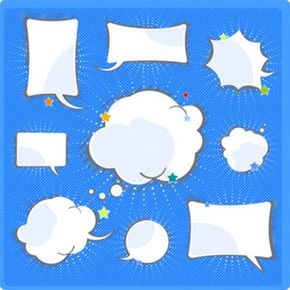
Characters speak through speech balloons. They think through thought bubbles. These tools are borrowed directly from comic strips. The visual language is shared. The execution is different.
Why graphic novels are not just “grown-up comics”
This is the misconception that needs killing.
Graphic novels are not comic books with more pages. They are not movie scripts waiting for a studio adaptation, though Hollywood has tried to turn them into one. They are not trade books, which are simply collected issues of a serialized comic.
Some critics go further. They argue graphic novels are not a genre of comics at all. They are a distinct artistic medium, as separate from comics as poetry is from novels. The argument holds water. The intent is different. The pacing is different. The depth is different.
A graphic novel is a literary work where the artwork is not decoration. It is narrative. The page layout is part of the message. The ink bleeds into the meaning.
The market shift: From niche to mainstream
The popularity curve for graphic novels did not rise slowly. It spiked.
In 2001, the market was modest. By 2006, sales reached approximately $330 million. That is more than four times the 2001 figure. The growth was not just about quantity. It was about perception. Readers began to treat these books as serious literature, not just entertainment for young fans.
The format is gaining ground in ways that feel almost violent in their speed. What was once a niche interest is now a standard part of publishing, education, and popular culture. The visual language is evolving, too. The “zam, blam, and pow” of older comics is giving way to more complex, experimental, and often quieter visual storytelling. The medium is maturing. It is shedding its cartoonish reputation.
Is it just a fad? The sales numbers say no. The critical reception says no. The sheer number of titles being published says no.
The question is not whether graphic novels will survive. They are here. The question is what they become next. And that is where it gets interesting.

From Cave Paintings to the First Comics
Before alphabets took over, communication was visual. Cave drawings and Egyptian hieroglyphics prove that humans have always relied on images to convey complex ideas. As language evolved, literacy became a privilege reserved for elites and scholars. The working class, largely excluded from written text, continued to rely on pictures for shared understanding.
Mechanization changed that dynamic. When labor processes became faster, the working class gained leisure time. They consumed visual media like political cartoons in newspapers and almanacs, where images did the heavy lifting of narrative.
The formal comic emerged in 1837. Swiss artist Rodolphe Topffer published “The Adventures of Mr. Obadiah Oldbuck” in English. This work featured panel borders and a tight synergy between text and art, establishing the structural blueprint for the medium.
The Superhero Boom and the Post-War Shift
Comics exploded in North America between the late 1930s and the 1950s. The format stabilized into short, serialized issues dominated by the superhero paradigm. Characters like Superman and Batman became global icons.
World War II accelerated this trend. American soldiers stationed abroad bought comics for cheap entertainment. The predictable victory of heroes over villains provided a necessary morale boost during chaotic times.
As the war ended, the simplistic good-versus-evil narrative lost its grip. Publishers pivoted to horror, crime, Western, and science fiction to stay relevant. The page count remained static until 1950, when St. John Publications released “It Rhymes with Lust.”
Arnold Drake wrote it, and Leslie Waller illustrated it. At 128 pages, it was billed as a full-length picture novel. Drake and Waller aimed to marry sophisticated writing with refined art. It was one of the first deliberate attempts to create what we now call a graphic novel.
“It Rhymes with Lust” succeeded commercially, but it did not immediately trigger a surge in longer-form comics. The industry was about to face a crisis that would reshape the medium entirely.
The Comics Code and the Underground Explosion
In 1954, psychiatrist Frederic Werthem published “Seduction of the Innocent.” He argued that comics caused juvenile misbehavior. While the public did not immediately burn their collections, the fear was real.
Publishers responded by creating the Comics Code Authority. This self-regulatory body dictated what artists and writers could publish. The goal was to assuage parental fears. The result was a bland, sanitized mainstream. Readers got bored.
A counterculture emerged in the late 1960s. Independent publishers released comix, a deliberate misspelling to distinguish these works from commercial comics. The “X” was a nod to the adult material inside. Comix featured drug usage, sex, and political dissent. They rejected the childish reputation of mainstream superhero books.
This artistic freedom transformed the medium. Grittier, funnier, and edgier stories replaced the predictable heroics. The stage was set for a new era of long-form storytelling.
Defining the Graphic Novel
In 1978, Will Eisner published “A Contract with God.” Often cited as the first modern graphic novel, it consists of four short stories set in a poverty-stricken part of New York City. The central theme is humanity’s relationship with God.
Eisner pitched the book to a publisher, labeling it a “graphic novel.” He believed he had coined the term. He later learned that Richard Kyle had used the phrase in a 1964 Comic Amateur Press Alliance newsletter. Regardless of its origin, the label stuck.
Once the term gained traction, a wave of lengthier comics appeared, hoping to capitalize on the phenomenon. Eisner’s work helped legitimize the format, moving it beyond the shadow of the Comics Code era.
Why do some artists still insist on the term graphic novel and reject the label “comic book”? The distinction is about more than just page count. It is about asserting a literary and artistic identity separate from the mass-market, code-compliant publications of the 1950s. The medium is no longer just for kids.

Why “Graphic Literature” Is Just a Fancy Label
The link between superheroes and comic books runs deep. It goes all the way back to the Golden Age of the 1930s and 1940s. That era cemented certain stereotypes so firmly that some artists feel the need to distance themselves from the term “comic book” entirely. They reach for synonyms like graphic literature or graphic memoirs instead.
It’s mostly semantics.
The medium itself doesn’t care about labels. Sequential art covers a massive range of genres. You’ll find action and superhero stories, sure. But you’ll also find mystery, drama, horror, and romance. These stories aren’t just for kids or teens; they target every age group.
The Range of Tone and Topic
Graphic novels can be flippant and fun. They can be grave and serious. They can do anything a regular novel does. They wrestle with complex topics using the same literary tools: symbolism, foreshadowing, flashbacks, anthropomorphism, plot, and metaphor.
Sometimes the text is autobiographical, but it defies easy categorization.
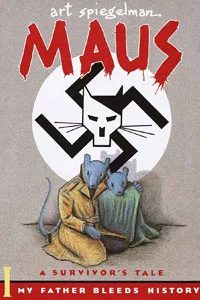
Take Art Spiegelman’s “Maus.” He used the medium to tell the true story of his father’s experience during the Holocaust. In the book, Jews are drawn as mice and Nazis as cats. It is a gut-wrenching memoir. Spiegelman won the Pulitzer Prize for it. It remains the only graphic novel ever to receive that honor.
Could he have released it as a long series of comic books? Absolutely. Nothing stopped him. He just chose the graphic novel format to express himself.
Where to Find Them
There is one consistent difference between regular comic books and graphic novels: where you buy them.
You’ll typically find standard comics at street newsstands. If you want graphic novels, you’ll likely need to head to a dedicated comic book shop or a bookstore. The location signals the intent. One is disposable entertainment; the other is a bound collection meant to last.
Once you understand the scope of what fits under this umbrella, the next step is simple. Go find a local bookstore. Dig through the graphic novels section. See what’s there. It might be worth your while to explore.
Deconstructing the Superhero Myth: Moore, Gibbons, and “Watchmen”
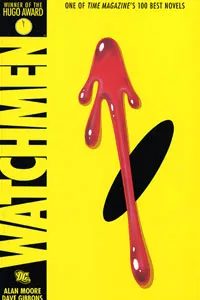
The medium found its adult credibility in 1986. Alan Moore, Dave Gibbons, and colorist John Higgins released Watchmen, a twelve-issue series that later became a trade paperback. It cracked Time Magazine’s top 100 novels list, a milestone that signaled the genre was no longer just for kids.
Moore built an alternate Cold War reality. Instead of flying capes and moral certainty, the characters were masked vigilantes riddled with psychological fractures. The story interrogated power, control, and human morality with a weight that felt almost philosophical. The tagline, “Who watches the watchmen?”, stuck because the book asked uncomfortable questions about nuclear annihilation and societal decay. It satirized the superhero trope by exposing the flaws underneath the masks.
The Bleak Return of Batman in “The Dark Knight Returns”
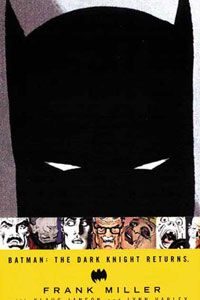
Frank Miller took a similar approach with The Dark Knight Returns. Here, Bruce Wayne is retired, but Gotham City is rotting under rampant crime. The world is bleak. The suit comes back not out of duty, but out of a desperate need to restore balance.
Like Moore, Miller rejected the idea of the indestructible icon. His Batman is flawed, human, and operating in a society that has lost its moral compass. The contrast between these two works is subtle but important. One deconstructs the team; the other isolates the individual. Both stripped the glossy veneer off the superhero genre and left something grittier in place.
Beyond the American Mainstream: Manga and Global Reach
Geography never really mattered for comic art. In Japan, the industry exploded under the banner of manga. These graphic novels cover every conceivable topic. The fan base is massive, spanning all ages and genders.
This popularity crossed the Pacific. American readers began devouring manga titles, and they frequently competed with native-language comics for bestseller spots. The appeal was universal. Whether it was the gritty realism of Watchmen or the diverse genres of Japanese manga, readers were hungry for stories that treated them as adults.
The shift wasn’t just about better art. It was about respecting the reader’s intelligence.
Where to Find the Next Big Graphic Novel
The barrier to entry for groundbreaking graphic novels is low. You don’t need a specialist degree to recognize a masterpiece. The classics are established, but the medium continues to evolve. From the psychological depth of Moore to the global reach of manga, the landscape is wide. The next page lists specific titles that define this era, but the core message remains: the best graphic novels feel like literature because they refuse to be simple.
The Collaborative Machinery Behind the Ink
Creating a graphic novel is rarely a solo act. It is a massive undertaking, one that demands significant time and energy to produce something that feels like lasting art.
While the writer spins the elaborate, beguiling tales, they are just one cog in a much larger machine. To understand how these slick, riveting volumes actually come to life, you have to look beyond the pen.
How Illustration Drives Narrative Without Words
Take Chris Ware’s Jimmy Corrigan: The Smartest Kid on Earth. The title character wrestles with family dysfunction, race, and his own past. But the true genius lies in the silence.
Some pages contain absolutely no text.
Ware relies entirely on illustration to move complex flashbacks and layered storylines forward. It is a stark reminder that in graphic novels, the image does more heavy lifting than the dialogue.
Why Journalistic Graphic Novels Resonate
Joe Sacco proved that you can blend rigorous journalism with graphic storytelling to devastating effect. His work, Palestine, draws directly on his visits to the West Bank and Gaza Strip. The drawings are bleak, documenting the daily hardships of people caught in the crossfire of Israeli conflict and war.
In Safe Area Gorazde, he applied the same structural approach to the Bosnian War, grounding the horror in interviews with survivors. It is not just fiction; it is testimony rendered in ink.
Who Shapes the Cultural Landscape of Graphic Novels?
The medium attracts heavyweights from outside the comic arts. Neil Gaiman, a household name long before he touched the format, brought his literary breadth to The Sandman. The series features immortal entities like Death and Desire delving into human history. Gaiman blends pop culture, serial killers, and Freudian analysis into a tapestry of historical settings.
Then there is the personal. Marjane Satrapi’s Persepolis mashes cultural and gender issues into her autobiography, detailing how the Iranian Revolution scarring her childhood. Or Howard Cruse’s Stuck Rubber Baby, unveiled by DC Comics in 1995, which followed a white, homosexual Southerner as he became embroiled in the Civil Rights movement.
These works show that the “machine” of a graphic novel is built by many hands. The writer starts the engine, but the artist, the editor, and the cultural context keep it running.
What happens when the writer steps back and lets the art speak?

How Many People Actually Make a Graphic Novel
You can’t do this alone. While a novelist sits in a quiet room and types a manuscript in solitude, graphic novels demand a crew. It is a factory line of imagination. You need a writer, a penciler, an inker, a colorist, and a letterer. Five distinct skill sets. One finished product.
The writer handles the prose. They build the plot, craft the dialogue, and steer the character arcs. But words are only half the equation. A graphic novel is defined by its visuals, which means the writer’s text needs a visual engine to run on.
That engine is the penciler. This artist maps out the page. They decide where the panels go, how the gutters breathe, and how the characters move through the environment. Their drawings are rough, sketch-like frameworks. Think of them as the skeleton. The penciler is often a generalist, capable of rendering a skyscraper, a terrified dog, or a complex human face with equal accuracy.
Then the inker steps in. They take that skeleton and give it muscle. Using brushes and pens, inkers shade, define, and add depth. They erase the rough pencil lines that might weaken the image quality. It is a precise, high-stakes layer of detail that transforms a sketch into a finished drawing.
Unless the book is intentionally monochrome, the colorist takes over. They don’t just paint; they set the mood. Dark hues can signal danger. Bright tones can lighten the narrative air. While past colorists worked with physical paints and pencils, most now rely on software like Adobe Illustrator. The tools changed, but the job remains: make the page feel the way it should.
Finally, the letterer puts the words inside the drawings. They draw speech balloons and thought bubbles. They choose fonts that match the story’s temperature. Big, bold text screams. Small, squiggly lettering whispers uncertainty. If the font is wrong, the emotion is lost.
The collaboration style varies wildly. Sometimes the writer dictates every visual choice. Other times, the artists take the lead.
Take Dean Koontz’s Frankenstein. The author handed the creative control to the art team. They decided how to illustrate the story. The level of collaboration depends entirely on the people in the room and the scope of the project. At its best, this team bounces ideas back and forth until the story clicks. At its worst, they bounce each other off the walls.
If a big name like Koontz is on the cover, Hollywood is already watching. That is the real endgame. Film adaptations of graphic novels are lucrative beasts. And as you are about to see, they draw massive crowds.
Graphic Novels Go to Hollywood
How “House of Leaves” and “Jimmy Corrigan” Changed Classroom Conversations
Schools used to treat comics like contraband. Teachers viewed them as distractions, a waste of time that kept students from reading “real” literature. That line has blurred.
Jimmy Corrigan, the Smart Young Man, by Chris Ware, sits on shelves in university literature departments now. It’s not a gimmick. It’s a serious exploration of family dynamics, memory, and identity, packed into a 328-page book that looks like a scrapbook. The structure mirrors the fragmentation of the narrator’s mind.
Then there is Mark Z. Danielewski’s House of Leaves. It’s not a comic book in the traditional sense, but its visual layout and intertextual play make it a graphic-novel-adjacent text that forces readers to engage physically with the page. Both titles prove that visual storytelling carries thematic weight comparable to any novel.
Why Literary Scholars Take Graphic Novels Seriously
Academia has shifted. It’s no longer just about plot. Critics analyze visual rhetoric, gutter space, and panel composition.
- Complexity : Works like Jimmy Corrigan or Watchmen demand close reading. You have to look at how a splash page impacts the narrative flow.
- Accessibility : These texts bridge the gap between casual reading and high-literature analysis. They attract students who might never open a dense prose novel.
- Historical Context : Understanding the evolution from pulp comics to literary graphic novels requires looking at the 1960s and 70s underground comix movement.
Which Graphic Novels Are Now Standard in College Courses?
A few titles have become staples in syllabi.
- Watchmen by Alan Moore and Dave Gibbons. The deconstruction of heroism.
- Maus by Art Spiegelman. Holocaust testimony through animal allegory.
- Persepolis by Marjane Satrapi. Memoir, politics, and art in Iran.
- Jimmy Corrigan by Chris Ware. The pinnacle of American literary comics.
These aren’t just “fun books.” They are complex, challenging texts that require the same critical lens as any other literary work.
How Digital Access Is Shaping Academic Adoption
The move to digital isn’t just for entertainment. It’s changing how students interact with complex visual texts.
Tablets allow for zooming. You can examine every brushstroke in a Ware panel. You can trace the layout of Danielewski’s text without losing your place. This interactivity suits the medium. A static print book can’t replicate the tactile experience of turning a page to find a hidden clue.
“The page is not a window. It’s a machine.”
That idea drives the current academic interest. The medium itself is part of the message.
Where the Boundary Still Blurs
Not every teacher is on board. Some still see graphic novels as a crutch. They worry that visual aids will replace critical thinking. That fear is outdated.
Reading Persepolis requires interpreting silence as much as speech. Decoding Maus demands historical knowledge that goes far beyond the pictures. The barrier to entry is high, just like any serious literature.
The stigma is fading. You’ll see more graphic novels in high school AP English classes and college humanities courses. The medium has earned its place. It’s not a deviation from the canon. It’s an expansion of it.
And for the creators? The vindication is quiet. They don’t need applause. They just need the work to be read.

Why graphic novels are finally winning over reluctant readers
The classroom dynamic has always been tense when it comes to reading material. For decades, the comic book was the ultimate cheat code for the disengaged student. You know the scene: a sociology textbook open on the desk, but eyes locked on the “Silver Surfer” tucked between the pages. It was contraband. It was a distraction. Teachers fought a losing battle against thin pamphlets that promised escapism over education.
That dynamic is shifting. Graphic novels are no longer just things to hide. They are becoming legitimate teaching tools in classrooms and school libraries across the country. The reason? A growing recognition that the one-size-fits-all text model fails many students. People absorb information differently. Some thrive on prose. Others need visual cues to lock in concepts.
How visual learning challenges traditional English curricula
Jeff Hayes, a Ph.D. candidate in secondary education English language arts at the University of Alabama, points to a historical blind spot in U.S. education. The system built itself around a specific idea: information is best learned through text. Prose. Poetry. Script. Anything devoid of visual context was considered the “pure” form of literary study.
“Our educational system became obsessed with the idea that information was and is best learned through prose, poetry, and script devoid of visual context or connection of any kind.”
Hayes argues that this obsession leaves students behind. Those with learning abilities that don’t match the current curriculum are underserved. Graphic novels offer a different lane. They expose students to the variety of styles in which people actually communicate. It’s not just about reading words; it’s about interpreting space, color, and sequence.
Why schools resist integrating graphic novels
If the pedagogy makes sense, why is the adoption so slow? Inertia is a powerful force in education. Hayes notes that teacher training programs have little room to innovate. They are squeezed between two heavy weights: standardized testing and the funding attached to it. You can’t easily swap out a core text for a graphic novel if the state test doesn’t account for it.
Then there is the stigma. It’s old, but it sticks. Parents often view comic books as a detriment to “real” reading. They see them as a distraction. Libraries and schools walk a tightrope, weighing the educational potential against the perception that comics are frivolous or harmful to literacy development.
Which students benefit most from graphic novel instruction?
The benefits aren’t universal, but they are specific and potent for certain groups. Teachers are finding that graphic novels are particularly helpful for:
- Reluctant readers
- Struggling readers
- Students with learning disabilities, including dyslexia
The format does the heavy lifting. The smaller word count cuts down the intimidation factor. The colorful visuals grab attention that plain text might lose. For a student who shuts down at the sight of a dense paragraph, a comic panel is an invitation, not a wall.
Beyond engagement, the medium teaches mechanics. Punctuation, paragraph structure, and outlining all have a place in the gutter and the panel. But it goes deeper. Comics help students develop advanced reading skills and build confidence. They force readers to understand inferences. They introduce concepts like satire, parody, plot, spacing, allusion, irony, and symbolism in ways that text-only mediums often struggle to convey.
Are graphic novels just a trend or a lasting educational shift?
Whether digital or analog, graphic novels are becoming a more powerful means of sharing stories. The content ranges from frivolous to serious. The purpose spans entertainment and education.
In a tech-saturated society, where passive pursuits like cable television and aimless web surfing dominate, comics offer an active mental workout. They demand interpretation. They reward attention.
It’s a happy ending, of a sort. The kind that would make Superman proud. Though, as with any cultural shift, the fight isn’t over. The stigma lingers in some faculty rooms and parent-teacher conferences. But the panels are getting clearer, the text is getting recognized, and the readers are getting in.

