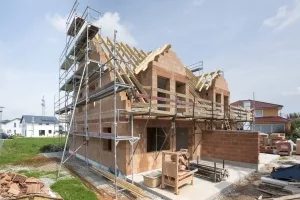
Look at Croatia or Lithuania. The ownership numbers are staggering. More than 90 percent of citizens live in their own homes. It is a stat that feels almost mythical compared to the rest of the continent. Germany sits at the opposite end of the spectrum. Roughly half of households own their property. It is a weak position. But the gap is closing. Ownership is climbing.
The dream of the single-family home is stronger than ever. Why? Because borrowing money was cheap for a long time. Low construction interest rates fueled the desire to buy. Now that the money is expensive, the math has changed. Anyone thinking about building a house faces hard choices. The decision on financing will dictate your life for decades.
Banks issued 3.8 billion euros in housing construction loans in May 2018 alone. That data comes directly from the Bundesbank. It shows massive capital flowing into real estate. But loans are only one side of the coin. The other side involves the structural costs. Material prices. Labor shortages. Land availability. You cannot calculate a mortgage without understanding the underlying build costs. The interest rate is just the entry fee. The rest is a different kind of risk entirely.
Why concrete (and steel) still hold the foundation of modern housing
You might assume concrete is the undisputed king of modern construction. It is ubiquitous. It is everywhere. For decades, the narrative was simple: concrete is the material of the future. Universally applicable. Capable of being combined with metal to achieve immense load-bearing strength. It seemed like the only logical choice for a versatile, durable building block.
But the story is shifting.
Old materials are returning from the dead. Leading the charge is wood. Architects and builders are realizing that traditional materials offer practical advantages that synthetic composites sometimes lack. We are seeing a pivot. Not an abandonment of concrete, but a re-evaluation of its role.
How concrete actually works (and why it survives)
To understand why concrete remains the backbone of housing, you have to look past the gray slurry and see the chemistry. It is a multi-component system. Aggregates. Binders. Water.
Cement, when mixed with water, acts as the glue. It binds the stone fragments together. It sounds mundane. It is not.
The origins of concrete are surprisingly ancient. We are talking about Carthage. Rome. These civilizations used concrete-like materials millennia ago. Roman concrete is particularly famous. Why? Because of its reaction with water. The chemistry changes over time, getting harder rather than softer. It is a self-healing miracle in liquid form.
Modern construction demands more than just pressure resistance. Ancient concrete could withstand crushing weight. Today’s buildings face wind, earthquakes, and thermal expansion. They need tensile strength. Concrete is weak in tension. It cracks.
The solution is simple but effective: steel.
The rise of reinforced concrete in residential projects
By embedding steel mesh or rebar into the concrete mix, you create reinforced concrete. This hybrid material handles both compression and tension. It withstands weathering. It handles mechanical stress. It is durable.
But where does it actually go in a home?
In single-family, duplex, or multi-family homes, concrete rarely forms the visible walls. That is usually drywall, brick, or siding. Concrete is the skeleton. The foundation. The load-bearing core.
Here is where concrete is typically deployed in residential builds:
- Foundations: Such as the concrete slab on grade. This is the base. It distributes the building’s weight into the soil.
- Basements: Walls and floors. Concrete provides moisture resistance and structural integrity below ground.
- Floors and Columns: The decks you walk on. The pillars that hold up the roof.
Pure “concrete houses” are rare in this sector. You don’t usually live inside a gray monolith. Instead, a concrete foundation supports a manufactured home or a solid masonry house.
What lies above the concrete base?
Once the concrete base is set, the rest of the structure takes over. Modern solid-house construction often uses alternative materials for the walls and upper floors. You might find:
- Clay bricks. Traditional. Breathable.
- Calcium silicate blocks. Precise. Fire-resistant.
- Porous or gas concrete. Lightweight. Good insulation.
- Expanded clay aggregate. Another lightweight option.
These materials are chosen for thermal performance, ease of construction, or cost. But they sit on the concrete. They rely on it.
In commercial high-rise construction, the role of concrete expands. Here, it often forms the skeletal load-bearing structure. The “bones” of the skyscraper. In these cases, concrete is frequently poured on-site into forms. It is wet. It is heavy. It sets into the shape of the building.
The result is a structure that is rigid. Secure. But is it
Why Wood Is Making a Comeback in Modern Sustainable Construction
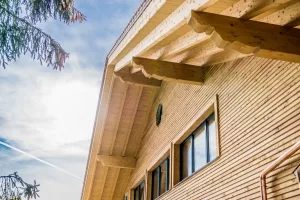
Wood is the OG building material. Humans have been stacking logs for millennia. It’s still here, largely because it’s renewable, but also because it actually works. Availability dictates tradition, sure, but the physics don’t lie.
The material has a unique combo of traits. High tensile strength. Low weight. It’s light enough to lift with a crew, strong enough to hold up a roof. That’s why you still see it in every wood home construction project, specifically in the roof structure and underlayment.
But there’s a quieter benefit. Wood regulates humidity. If you don’t seal it with varnish, it absorbs moisture from the air. This prevents the rapid spikes in humidity that lead to mold. It breathes.
Today, you’ll find it in:
– Wall and ceiling paneling
– Shingles
– Facade boards
Lately, it’s being rediscovered as a structural element, even inside insulation layers.
The Return of the Timber Frame
Mineral materials killed the wooden house trend for a while. Once mass concrete and brick became the industrial standard, timber fell out of favor. But we’re seeing a shift. Builders are realizing that wood isn’t just for cottages anymore.
It’s not always obvious. Many modern “brick” homes use wood for the facade. But in the cabin or log home style, it’s undeniable.
People who choose to build with wood need to pay attention to the quirks. Fire safety is the big one. There’s a myth that wood is highly flammable. In practice, it’s more nuanced. When wood burns, it chars on the outside. This char layer insulates the core. The center stays intact longer.
Compare that to a mass concrete house insulated with Styrofoam. Styrofoam can act like fuel. It burns fast. It burns hot. Solid wood doesn’t have that problem to the same degree.
That said, fire codes still apply. You can’t ignore safety. But if you get it right, you get a natural aesthetic and a healthy indoor climate. Plus, wood has a better environmental footprint than most alternatives.
Wood in Prefab: The Hidden Backbone
You don’t need a log cabin to benefit from timber. Prefabricated homes rely on it heavily. The skeleton of those modules? Almost always wood. It’s the standard for framing.
Insulation is where things get interesting. Styrofoam has taken a hit recently. Not just because it’s bad for the planet, but because it accelerates fires.
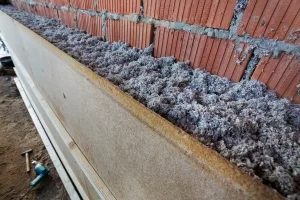
Wood is stepping in as the alternative. You can buy it as pressed wood fiber boards or loose-fill wood fiber. Contractors blow these into the cavities of prefab walls. It works. It’s sustainable. And it’s safer than the plastic alternatives.
The question isn’t whether wood will stay in construction. It’s whether we’ll finally stop treating it like a second-class material after centuries of preferring stone and steel.
The Death of Asbestos and the Insulation Revolution
Concrete and steel remain the backbone of construction, but the material landscape is shifting faster than most people realize. Copper still graces roofs, galvanized sheets are common, and wood is enjoying a well-deserved renaissance. But there are materials that have vanished overnight, and nothing illustrates this shift quite like asbestos.
Banned in Germany since 1993, asbestos isn’t just discouraged; it’s illegal. The rationale is brutal and straightforward: asbestos fibers are carcinogenic. For decades, however, this deadly material was everywhere. It lined facades, covered roofs, and formed the basis of floorings. Now, removing it is a nightmare. You don’t just sweep it up. You need respirators, full-body protective suits, and specialized disposal protocols. It is expensive, dangerous, and complex.
Removing asbestos isn’t a renovation; it’s a hazardous material operation.
While we are scrubbing toxic pastes from our buildings, the approach to insulation is undergoing a quieter but equally significant transformation. Polystyrene, or Styropor, was once the gold standard for thermal efficiency. It was cheap, easy, and effective. Then came the fire hazard. In a blaze, Styropor doesn’t just burn; it accelerates. It turns manageable house fires into uncontrollable infernos. The risk is too high to ignore.
The industry is now scrambling for alternatives that don’t turn a home into a furnace. The solution isn’t one single product, but a return to nature and basic minerals. Wood fiber batts are being pushed into cavities, offering breathability and safety. But the list of replacements is broad. Plant-based options include flax, cork, hemp, and even coconut fiber. These materials breathe, regulate humidity, and don’t feed the fire.
Then there are the mineral options. Expanded clay (Blähton), silicates, and mineral wool provide density and non-combustibility. They aren’t always as easy to install as foam boards, but they don’t kill you in a fire.
Why Material Choice Matters More Now
Houses don’t fall from the sky. They are assembled from a toolkit of concrete, wood, metal, and increasingly, sustainable insulators. Concrete handles the heavy lifting—foundations, floors, structural frames. Reinforced with iron, it conquers compression and tension. It is heavy, cold, and incredibly strong.
Wood is the polar opposite. It warms the space, not just visually but tactilely. It absorbs sound and humidity. It works for structural beams, interior finishes, and insulation. The choice of material is no longer just about cost or availability. It is about health. It is about fire safety. It is about what we are willing to breathe and live with for decades.
Asbestos is gone. Styropor is losing its throne. Concrete remains, but its dominance is being challenged by materials that respect the human body and the environment. The building industry is learning, painfully and slowly, that what we use to shelter ourselves matters just as much as how we shelter ourselves.
The question isn’t just what is strongest. It is what is safest. And the answer is changing every day.