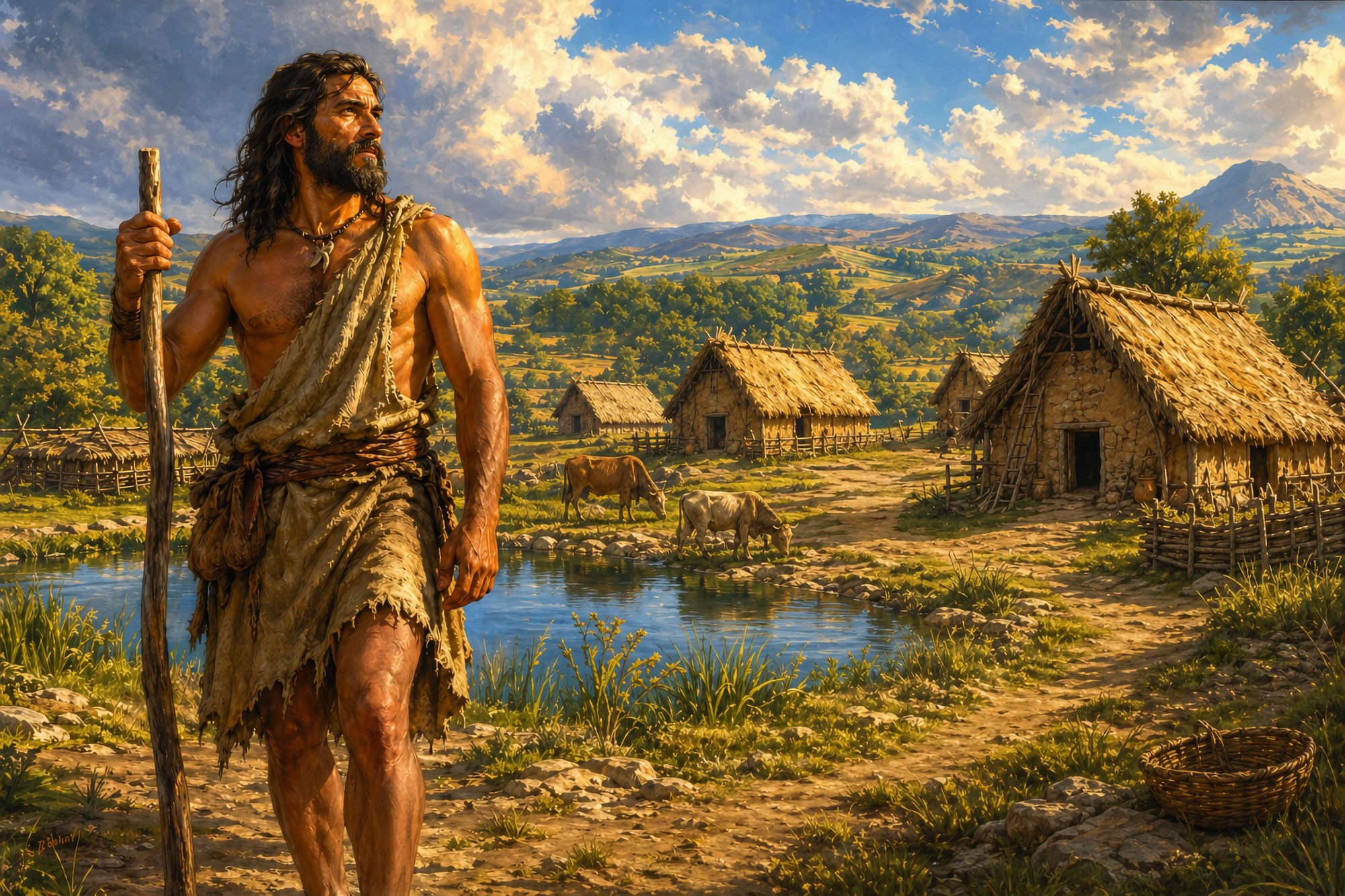
New genetic evidence is dismantling the long-held belief that the transition to farming in North Africa followed a single, straightforward path. Instead, a landmark study published in Nature reveals that the “Neolithic Revolution” in the Maghreb was driven by a complex interplay of migration, cultural exchange, and local adaptation among diverse groups.
For decades, archaeologists debated whether farming practices in North Africa emerged independently or were imported from elsewhere. The prevailing theories often leaned toward either complete replacement of local hunter-gatherers by incoming farmers or the independent invention of agriculture by indigenous populations. However, new data suggests the reality was far more nuanced: farming spread through repeated contact between African hunter-gatherers, early European farmers, and East Saharan herders.
Genetic Evidence from Three Key Sites
The study, led by an international team including researchers from the Universities of Córdoba, Huelva, and Burgos, along with Morocco’s Institute of Archaeology and Heritage Sciences (INSAP), analyzed ancient DNA from three significant sites in Morocco. These genetic clues provide a timeline of how populations shifted and mixed between 5500 and 4500 BC.
- Kaf Taht el-Ghar (Tetouan): Here, researchers identified individuals descended from European farmers who arrived in the region approximately 7,400 years ago. This confirms a direct genetic link to the Iberian Peninsula.
- Ifri n’Amr Ou Moussa (Khémisset): A few centuries later, remains at this site showed individuals with fully local ancestry. Crucially, these people were already using pottery and engaging in farming-related practices. This challenges the idea that local hunter-gatherers simply vanished; instead, they adopted new technologies and customs without necessarily being replaced genetically.
- Skhirat-Rouazi (South of Rabat): Dating to about 1,000 years later, the genomes here point to ancestry linked to pastoralist groups originating in the Fertile Crescent. This supports archaeological theories that such groups moved westward across North Africa.
“The unidirectionality of the process now seems quite clear, probably from Iberia,” said Rafael M. Martínez of the University of Córdoba, noting that early stamped Moroccan ceramics belong to a wider Western Mediterranean tradition.
A Network of Exchange, Not Just Replacement
The findings highlight that the Maghreb was deeply connected to surrounding regions long before the Roman era or the spread of Islam. People on both sides of the Strait of Gibraltar were already sharing knowledge, technology, and genes.
Juan Carlos Vera of the University of Huelva emphasized that while earlier archaeological work had found ancient cereal and legume seeds in Moroccan contexts, this new genomic evidence confirms the physical arrival of immigrants and the projection of their genes into the local population.
However, the nature of this exchange varied by location. While early ceramics in the north reflected Western Mediterranean traditions, pottery found at Skhirat featured rope-pattern decorations linked to Saharan pastoralist groups, indicating distinct cultural influences merging in the region.
Divergent Paths: West vs. East Maghreb
Perhaps the most significant implication of this research is how it reshapes our understanding of North African identity. Cristina Valdiosera of the University of Burgos, who co-directed the project, noted that the ancestry of later Maghreb populations—including the ancestors of the historical Berbers (Imazighen)—was shaped by three main sources:
- African hunter-gatherers
- European Neolithic farmers
- Pastoralist groups from the Fertile Crescent (via Sinai)
This complexity is further underscored by a separate 2025 Nature study focusing on the eastern Maghreb. That research found a stark contrast to the west: communities in the east maintained far greater genetic continuity with local hunter-gatherers, even as they adopted Neolithic practices.
Why does this distinction matter? It suggests there was no single “North African” path to farming. In the west, migration and genetic admixture played a dominant role. In the east, local groups largely retained their ancestry while selectively adopting outside ideas, animals, and technologies.
Conclusion
The spread of agriculture in North Africa was not a story of simple replacement or independent invention, but rather a series of regional trajectories defined by interaction. The western Maghreb saw significant genetic mixing with European and Levantine groups, while the east preserved more of its indigenous hunter-gatherer heritage. Together, these studies paint a picture of a dynamic ancient world where culture and biology flowed across borders, shaping the diverse genetic landscape of modern North Africa.